About Us
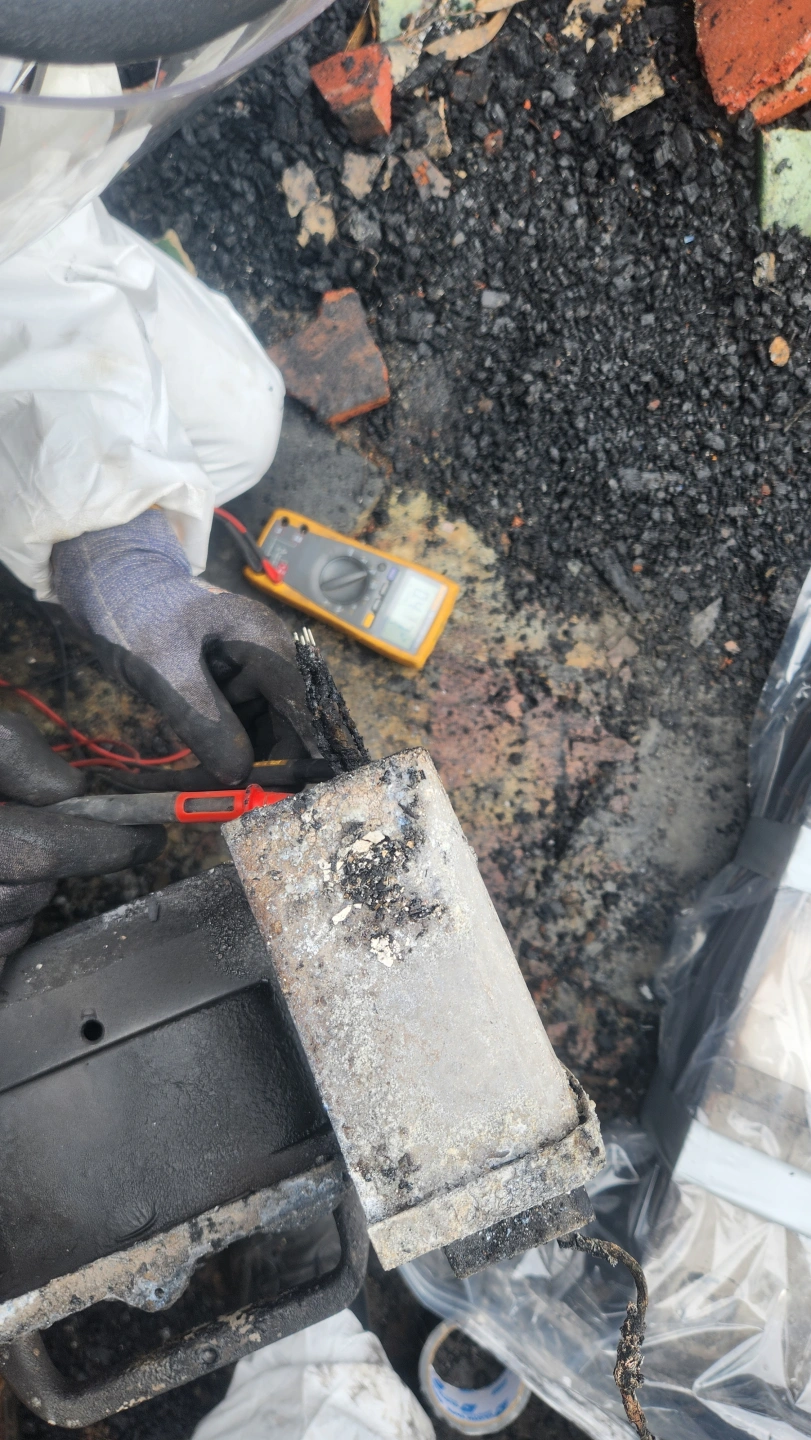
Closing the gap after suppression and before the next loss
Fire Scene Battery Recovery was established so that damaged and high-risk batteries have an accountable pathway from the scene or workplace to compliant transport and responsible downstream processing.
The battery may not be the cause but it can still become the next hazard
A battery exposed to heat, firewater, crushing, impact or structural collapse may remain electrically energised or internally damaged. Standard waste, freight and clean-up pathways are often not equipped for that condition.
Residual risk
Damaged cells can generate heat, vent, off-gas or reignite after visible fire has been extinguished.
Transport complexity
The applicable transport pathway depends on documented battery information, reported damage, externally observable indicators and the current ADG requirements.
Accountability gap
Insurers, owners, councils and contractors need one specialist to coordinate recovery, movement and evidence.
How The Experience Shows Up
Scene awareness
Recognise structural, electrical, contamination, evidence and access constraints before focusing narrowly on the battery.
Risk communication
Document what is known, what could not be accessed and why complete battery recovery can never be guaranteed at every scene.
Transport discipline
Keep every accepted battery within one of FSBR's two transport profiles: damaged or defective, or critically damaged or defective.
Stakeholder coordination
Liaise with owners, insurers, loss adjusters, investigators, trades, restoration teams and downstream facilities.
Evidence
Photographs, weights, classifications, packaging and disposal records help explain the work after the scene is cleared.
Environmental outcome
Coordinate responsible recycling or lawful processing through an appropriate receiving facility and keep batteries out of general waste.

Battery Recovery Services established to address the growing risk of damaged lithium batteries at fire scenes
Why Experience Matters
Battery incidents are not always resolved once visible fire is extinguished. Damaged lithium-ion batteries may remain thermally unstable and continue to present:
Residual fire and re-ignition risks
Toxic and flammable off-gassing hazards
Risks during handling, movement, and transport
Environmental contamination concerns
Understanding these risks requires more than disposal capability alone — it requires practical incident awareness and realistic risk management decision-making.
This Operational Background Ensures
A practical understanding of post-fire and post-suppression hazards
Strong awareness of delayed ignition, thermal runaway, and cell instability risks
Respect for scene integrity, evidence preservation, and investigative processes
Realistic and defensible risk mitigation strategies aligned with industry and regulatory expectations
A Specialist Service for Western Australia
Fire Scene Battery Recovery (WA) operates exclusively within Western Australia, providing a specialist service focused specifically on post-fire battery risk management and recovery.
We work alongside — not in place of — fire investigators, remediation contractors, insurers, waste providers, and clean-up companies to help address the ongoing hazards damaged batteries can present after an incident.
Our role is to deliver outcomes that are:
Professional
Compliant
Environmentally sustainable
Focused on residual risk mitigation for people, property, and insurers
This targeted approach helps close a critical safety gap that exists between fire suppression activities and final site clearance or disposal.
Bring a battery specialist into the job before the recovery pathway becomes the delay
FSBR supports one-off incidents, referrals, procurement discussions and planned collection arrangements across Western Australia.